


The Democratic Republic of the Congo (DRC) was back to the news this month after a former UFC fighter-turned-podcaster was wounded in its eastern region while fighting there as part of Blackwater founder Erik Prince’s Vectus Global in support of Kinshasa. For background, the DRC has been fighting against Rwandan-backed rebels in their mineral-rich borderland, which led to the US brokering a peace deal last year that made it the DRC’s security patron in exchange for privileged access to these resources.
At the same time, despite Rwanda’s role in perpetuating hostilities as part of its “forward defense”/“strategic depth” against the rebels that found refuge there in the mid-1990s, the US retains close ties with Kigali. Not only does it remain one of the US’ top security partners on the continent in spite of its closeness with China and Russia, but a US-Canadian mining company formed a tungsten partnership with it last month for the explicit purpose of bolstering the US’ defense supply chains.
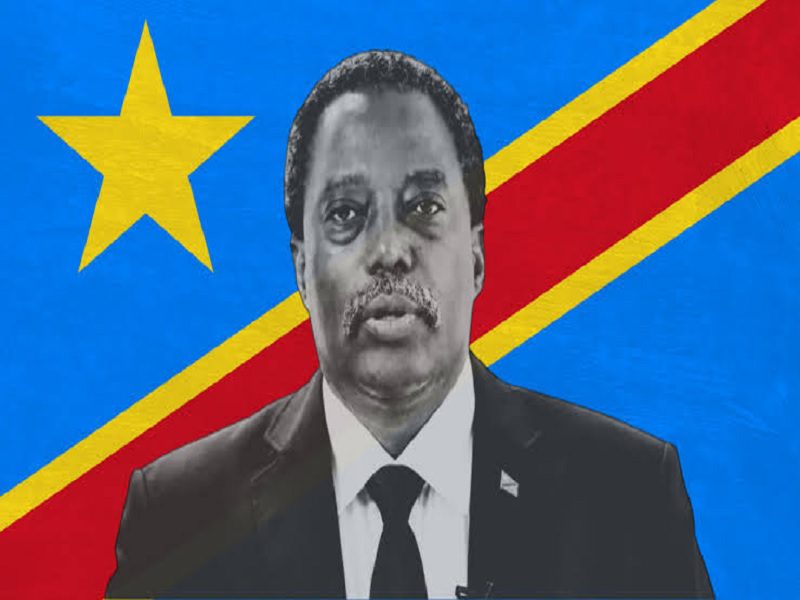
This backdrop contextualizes US-sanctioned former DRC President Joseph Kabila’s newly announced leadership of “The Front for the Refoundation of the Nation” (FRN) in early October that formed after the merger of the “Congo River Alliance” and the Rwandan-backed M23 rebels. It was assessed here in December that the scenario of Kabila’s return to power as the head of an opposition-led government could lead to “the country’s devolution into a federal state”.
The end result could then be “resource-rich provinces like the Kivus and the former Katanga (now divided into several smaller provinces) hoarding most of the national wealth. If the federal states become so autonomous that they command their own security forces, then the country would risk ‘Balkanization’, after which a scramble for influence and profits could commence all across the DRC.” The abovementioned analysis also assessed that Trump 2.0 might cynically support this scenario.
The dark reality is that the US is likely poised to profit either way. The DRC’s “Balkanization” by Rwandan-backed Kabila (whose father was backed by them in the 1990s before waging war against them and his other Ugandan ally after coming to power) could empower the US to more effectively divide-and-rule its resource-rich periphery from the distant central authorities. At the same time, the DRC’s victory over the Rwandan-backed rebels with Vectus Global’s support would also entrench US influence, so it’s a win-win.
The DRC’s mistake, which might ultimately prove fatal for its national unity (whether de jure or only de facto), is that it naively assumed that giving the US privileged access to its mineral resources would ensure enough US support that its aforesaid unity would remain intact, but that was a miscalculation. The only security patron that could have assured that was Russia, which doesn’t need the DRC’s minerals due to having its own in abundance, but the DRC dropped the ball so Russia might now back Rwanda.
If the Congo becomes another Russian-US proxy war after Ukraine and possibly soon Afghanistan, then the conflict’s strategic dynamics could shift to the point where the US more robustly backs the DRC, but its victory over what would then be the Russian-backed rebels wouldn’t be assured like in the past. The best-case scenario is the resource-centric strategic partnership that Russia and the US now negotiating leads enduring peace in Central Africa so that each can mutually benefit but not at the DRC’s expense.