

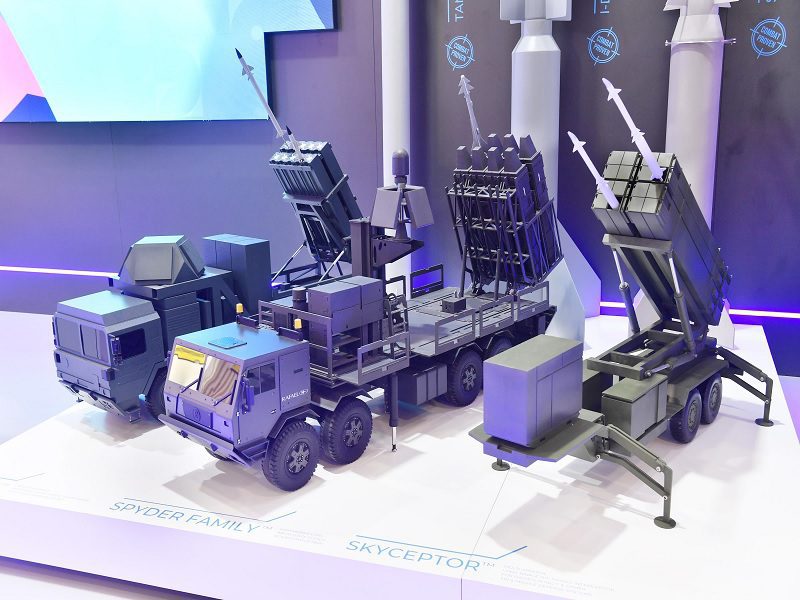
Greece sealed a €3 billion deal with Israel in late August to build the “Achilles Shield”, which “will provide a complete array of defense weapons against a range of threats from ballistic missiles to drones”. This is the latest manifestation of their defense partnership directed against Turkiye, which has a maritime dispute with Greece and is in a regional rivalry with Israel over the Levant. Their shared Cypriot partner also perceives Turkiye as a threat since it controls the northern half of its namesake island.
It was observed in early January that “Eastern Mediterranean Geopolitics Are Becoming More Complex” due to “1) the growing Turkish-Israeli rivalry in post-Assad Syria; 2) Israel’s reported plans to establish a rapid response force with Cyprus and Greece; and 3) Turkish ally Pakistan’s new military ties with Eastern Libya’s General Khalifa Haftar.” The proposed EastMed undersea pipeline between Israel, Cyprus, and Greece is another challenge for Turkiye just like the new Islamic NATO is another challenge for them.
The Islamic NATO has yet to collectively pose a challenge to Israel, Cyprus, and Greece, which comprise some of the countries that Netanyahu explicitly described as forming a “Hexagon” against “both the radical Shia axis…and the emerging radical Sunni axis” right before the Third Gulf War began. The same can’t be said for these three “Hexagon” countries vis-à-vis Turkiye, however, since they’re increasingly coordinating their containment activities along its southern flank in the Eastern Mediterranean.
The “Achilles Shield” will function as an Israeli-produced air defense umbrella over Greece that might extend to Cyprus one day too. On the surface, it’s a purely defensive initiative, but Turkiye might fear that the resultant security that it provides to Greece (and possibly one day Cyprus too) could embolden Greece (and maybe also Cyprus) to more assertively push back against its maritime claims. Turkiye might therefore accordingly expect that the “Achilles Shield’s” construction will precede future clashes at sea.
Of relevance, Trump 2.0 is considering returning Turkiye to the F-35 program arguably as a reward for its expected role in leading the expansion of NATO influence along Russia’s entire southern periphery through August 2025’s “Trump Route for International Peace and Prosperity” (TRIPP). As a reminder, TRIPP’s unstated dual purpose is as a Turkish-led NATO military logistics corridor into the Eurasian Heartland, which will consolidate the southern flank of the new “cordon sanitaire” around Russia.
Just like Turkiye might perceive the “Achilles Shield” as a threat, so too might the “Hexagon” perceive Turkiye’s potential return to the F-35 program, with this being due to their security dilemma. For those who aren’t aware, that refers to each side of a rivalry viewing the other’s supposedly deterrent-driven initiatives as giving their rival an offensive edge, thus prompting them to follow suit to keep pace. Each of the aforesaid initiatives is perceived by their own side as a deterrent and by the other as a threat.
Even though they’d neutralize each other and thus retain the military balance, their security dilemma could lead to one side pursuing another supposedly deterrent-driven initiative to bolster their defenses, after which the other would follow suit and so on and so forth. The “Achilles Shield” is therefore the latest in what’ll likely be a sequence of significant tit-for-tat military-technical moves by the “Hexagon” and Turkiye that could eventually draw the latter’s Pakistani ally into the Eastern Mediterranean.