

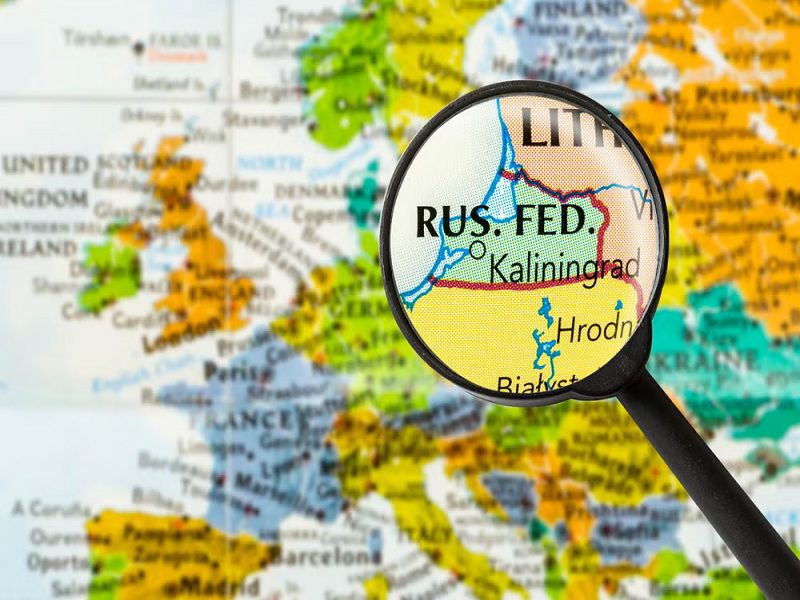
Polish Foreign Minister Radek Sikorski proposed in mid-September that Poland should “exercise so aggressively on our side (of Russia’s Kaliningrad exclave) as to make … [Russian President Vladimir Putin] uncertain of what we will do, and so that he needs to draw forces away from Ukraine.” By the end of the month, The i Paper from the UK published an article about how “Russia’s tiny outpost in Europe could be Putin’s greatest weakness”, which quoted former NATO officials who fantasized about blockading it.
Russia’s response was swift. Several days after The i Paper’s provocative piece, the Russian Embassy in the UK released a statement declaring that “Those advocating plans to blockade or strike Kaliningrad should have no illusions about the consequences. Any British or NATO military action against Russian territory would be met with a response using all means at Russia’s disposal, including nuclear weapons.” The Russian Embassy in Ireland released a similar statement to that effect on the same day.
After NATO chief Mark Rutte confirmed that he was aware of Russia’s warning, Kremlin spokesman Dmitry Peskov clarified that “The aforementioned letter and reports should not be viewed as a confrontational statement”, adding that “Kaliningrad is an integral part of Russia; it is a very important region of Russia – its westernmost one. Essentially, the point is that Russia will undoubtedly ensure the security of this region in accordance with its legislation.” He also advised NATO to tone down its rhetoric.
This was followed by Putin’s decades-long friend and senior aide Nikolai Patrushev downplaying NATO threats to Kaliningrad by declaring that “They [NATO countries] will not be able to carry out any threats. They [the threats] will remain mere words. If they even they try to take specific action, there will be a swift and appropriate response. We have stated this repeatedly. Everything will take on a completely different dimension.” Putin himself then hinted that nukes would indeed be used in that scenario.
This spree of statements should deter European NATO (E-NATO) from carrying out any serious aggression against Kaliningrad like could follow a potentially impending Ukrainian false flag (in Poland?) amidst the recent hysteria across the bloc about a supposedly imminent Russian attack. After Finnish President Alexander Stubb tried talking some sense into his counterparts, Sikorski flip-flopped from fearmongering about a war with Russia to claiming that “Russia doesn’t have the forces for a major attack on NATO.”
New Lithuanian Prime Minister Mindaugas Sinkevicius then declared at a press conference alongside Rutte that there is no evidence that Russia “is getting ready for something”. These two officials’ statements are significant since the “Suwałki Corridor/Gap” between Belarus and Kaliningrad, which NATO has long speculated could be invaded by Russia, transits their territories. They thus clearly acknowledge the apocalyptic consequences of attempting to blockade, let alone invade, Kaliningrad.
This worst-case scenario therefore likely won’t manifest even in the event of a Ukrainian false flag (in Poland?) since Kaliningrad’s overland Polish and Lithuanian gatekeepers aren’t interested in initiating World War III over this Russian exclave. Sikorski might talk tough, and perhaps Poland will soon carry out large-scale and possibly regular drills near Kaliningrad, but both his country and Lithuania know better than to bring about any tangible harm to that Russian region since Putin would nuke them if they dare.


