


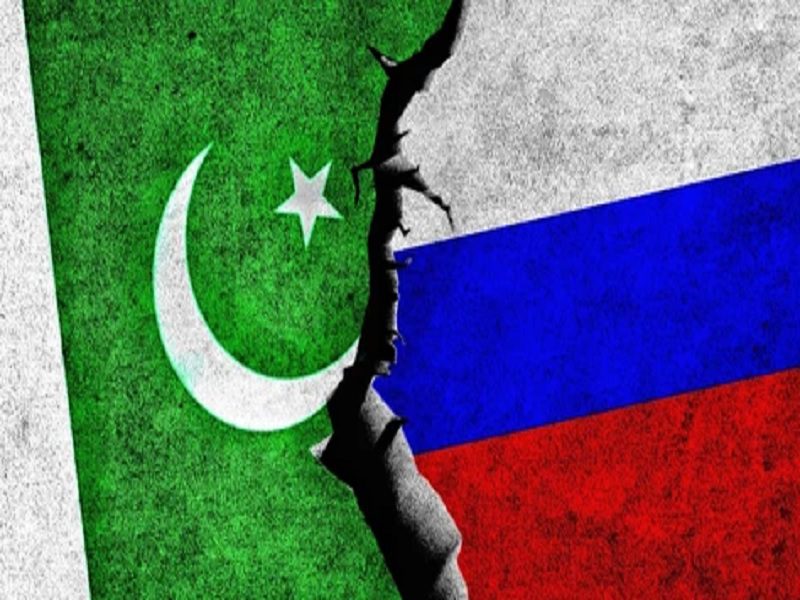
The USSR’s loss in the 1980s Afghan War, where Pakistani aid to the Mujahideen proved pivotal, has imbued Pakistanis with the false confidence that they’d win a second proxy war with Russia there if one follows their disagreements over Taliban-led Afghanistan like some on social media are now speculating. If Pakistan misperceives Russia’s potential arming of the Taliban against ISIS-K as being aimed against Pakistan, then its overreaction could spark a rapid sequence of events which makes that a fait accompli.
Pakistan’s fear that the Taliban will defy Russia by turning its drones against Pakistan, and the secondary fear that Russia will continue sending drones to the Taliban in that scenario instead of punitively cut it off, could prompt Pakistan to preemptively explore its own drone options. This could take the form of requesting financing from its Saudi ally for drone purchases from their Turkish one along the lines of the recent fake news that India is financing the Taliban’s purchase of Russian-allied Belarusian drones.
Any use of Turkish-supplied drones against the Taliban, including by Pakistani proxies, could prompt the Taliban to use any Russian-supplied ones against Pakistan, which Russia might then continue sending in those circumstances unlike if the Taliban was the first to use Russian-supplied drones against Pakistan. That could be because Russia might have planned for its companies to develop Afghanistan’s $1 trillion mineral industry, on fair terms of course, as one of the quid pro quos for modernizing its armed forces.
Critical minerals like those that Afghanistan is thought to have lots of are integral to the “Fourth Industrial Revolution” (4IR), particularly data centers, AI, and the “Internet of Things” that are expected to drive future economic growth. Russia is far behind the US and China in this race but could quickly catch up if it leverages Afghan mineral investments to this end, but that requires preventing the Taliban’s replacement by Pakistani-backed puppets, who it aims to install partly to then exploit these resources.
Pakistan’s alignment with the US after April 2022’s post-modern coup means that these minerals would likely go to fueling the US’ 4IR industries, while Russia would fuel its own industry with them so that it can compete with the US’ and China’s. Its Central Asian allies through whose territory large-scale arms exports to the Taliban could pass would benefit too from mineral processing (in wasteland regions), Russian nuclear-powered data centers, etc. to create a third 4IR pole for breaking the Sino-US duopoly.
Russia is a global leader in drone warfare and air defenses, the respective experience and technology of which can be transferred to the Taliban for preventing Pakistan from exploiting its aerial supremacy (presently with jets and maybe later with drones) to overthrow the Taliban. Unlike in the 1980s, Pakistan wouldn’t have the edge over Afghanistan since it’s now Pakistan that’s ruled by an unpopular coup government, beset by ethno-regional insurgencies, and perennially on the verge of bankruptcy.
Just like Pakistan once broke Soviet-backed Afghanistan, so too might Afghanistan break US-backed Pakistan if Pakistan sparks a second proxy war with Russia there. Pakistan couldn’t depend on significant US support in that scenario either since the US’ grand strategic goal is to contain China, not fight another proxy war with Russia after the Ukrainian one ends, and it can obtain its 4IR-required critical minerals from the Congo and elsewhere instead of Afghanistan. Pakistan should therefore tread very carefully.