

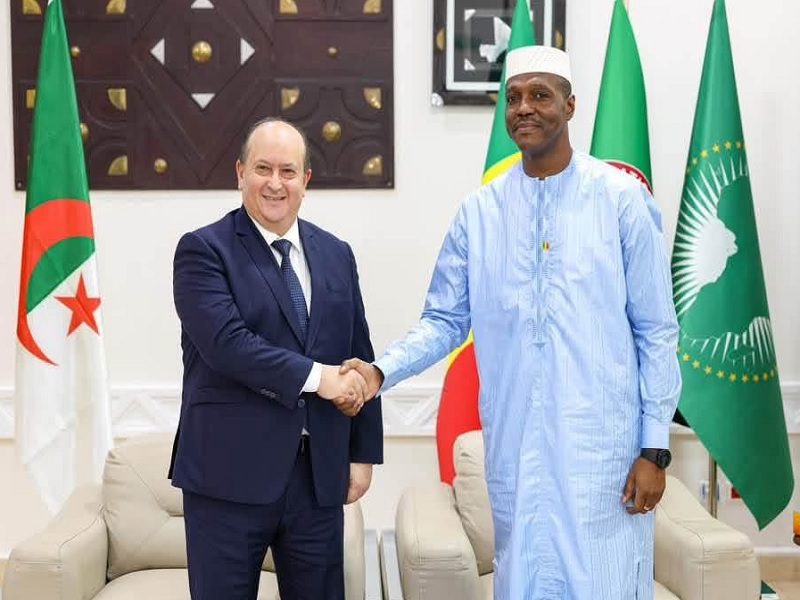
Algerian Prime Minister Sifi Ghrieb recently held talks with his Malian counterpart Abdoulaye Maiga in Bamako two months after the restoration of their relations. They were earlier severed in spring 2025 after Algeria shot down a Malian drone that it claimed had crossed their border but were already tense after Bamako scrapped the 2015 Algiers Accords with the Tuareg 15 months prior in January 2024. Russia reportedly played a central role in this summer’s rapprochement between its two regional partners.
The recent meeting between the Algerian and Malian premiers was more than just the symbol of their rapprochement. The agenda concerned talks on mining, energy, transport, and other forms of cooperation in a signal that their ties are rapidly evolving into a strategic partnership. It was earlier assessed that “Algeria’s Dispatch Of Su-30 Warplanes To Niger Reshapes The Regional Strategic Equation”, with the conclusion being that Algeria is now actively restoring its influence in the Sahel.
The previously mentioned drone incident in spring 2025 led to Mali’s Burkinabe and Nigerien allies following suit with the severance of their own ties with Algeria, which preceded the expansion of all three’s ties with its Moroccan rival. The resultant security dilemma might have contributed to Algiers’ speculative backing of Mali’s Tuareg rebels. Algeria is close to them, opposed Bamako’s scrapping of the accord that it brokered, and their military hub of Tinzaouaten is right on the Algerian border.
The ongoing Malian War, in which Tuareg rebels have once again allied with radical Islamists just like they did during the last war from 2012-2013, risks the creation of an ISIS-like caliphate on Algeria’s border. The hostilities also impede the scaling of Algeria’s trade with Mali that’s required to establish their envisaged strategic partnerships for restoring its regional influence. They therefore have an urgent interest in getting the Tuareg to defect from their radical Islamist allies and turn their guns against them.
For that to happen, Mali would likely have to restore the Algiers Accords, and the Tuareg might demand greater autonomy than that which they were already supposed to receive in exchange after carving out a de facto independent state with the help of “Jamaat Nusrat al-Islam wal-Muslimin” (JNIM). Algeria doesn’t want a de jure independent Tuareg state since it could foster separatism within its own borders and Niger’s, the latter of which is the transit state for the Trans-Saharan Gas Pipeline from Nigeria.
What’s thus needed is a balance between the Tuareg’s administrative-cultural rights and Mali’s territorial integrity. Moreover, the Tuareg probably wouldn’t agree to fight JNIM on their own, so a coalition between them, Mali, and possibly also Algeria might be required to convince them to turn their guns against JNIM. These issues, likely along with credible economic promises to the Tuareg connected to the envisaged Algerian-Malian strategic partnership, might have figured into the latest talks in Bamako.
Given the sensitivity of the aforesaid subjects, no Tuareg defection from JNIM is expected until the Algerian and Malian Presidents reach a deal on these issues, which in turn necessitates Assimi Goita’s visit to Algiers for related talks. Mali might have to make significant concessions to the Tuareg, but it would be worth it to save the country and prevent the rise of an ISIS-like caliphate in the Sahel, which would threaten the entire region and create an opportunity for France to divide-and-rule them all.