

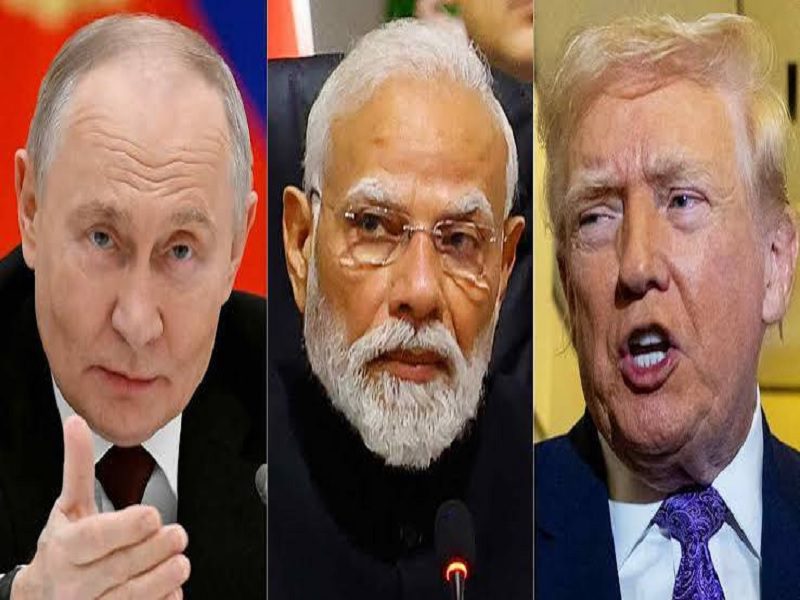
Popular Russian outlet Izvestia raised awareness of a paywalled Bloomberg report alleging that India might reduce its import of Russian oil, which was 45% of its total last month, to avoid US tariffs of up to 100% after Trump recently signed into law a bill empowering him to punish Russia’s top energy partners. Earlier in September, “India’s Top Diplomat Signaled That It’ll Defy Any New US Pressure Over Its Russian Oil Purchases”, which are considered to be indirectly essential to its national security.
Such pressure might soon pile up too, however, as suggested by more than just the aforesaid punitive tariff bill’s passing. The US and China are negotiating an extension to their trade war truce ahead of Xi’s visit later this week. The current disagreements primarily concern its duration according to the Financial Times. In the event that any such extension is ultimately agreed to, then the US presumably won’t impose punitive tariffs on China for its Russian oil purchases, which would draw attention to India’s.
Although the US benefits from India’s Russo-American balancing act since the strategic benefits that India derives most effectively empower it to serve as a counterweight of sorts to China, Trump 2.0 might nevertheless become “geopolitically greedy” and want the US to become India’s senior partner. In that scenario, the threat of punitive tariffs over its Russian oil imports could be leveraged as a Damocles’ sword to pressure India into gradually reducing them in parallel with joining the West’s Hormuz coalition.
About that, the French Foreign Minister proposed jointly working with India on ensuring “freedom of navigation in the Strait of Hormuz and the Bab el-Mandeb Strait” during talks with his counterpart on the sidelines of the UNGA. This coincided with the French and US presidents agreeing to work on the Hormuz dimension according to Emmanuel Macron’s tweet after his talks with Trump. India’s potential participation in the West’s Hormuz coalition, albeit under tariff duress if it happens, would be significant.
For starters, it would signify that the US decided to pressure India over its Russian oil imports while turning a blind eye to China’s for the duration of their likely extended trade war truce, thus suggesting that the US is more comfortable bullying India on this issue than China. Second, India’s participation would confirm that such tariff-related pressure was successfully weaponized by the US, with the third significance being that India joined the coalition in order to unlock alternative oil supplies to Russia’s.
Fourth, Russian policymakers would notice the US’ successful policy of coercing India through tariffs-related pressure into distancing itself from their country, which could lead to them concluding that it’s incapable of functioning as a reliable counterbalance to China. The implication is that Russia might tighten its embrace of China with all that could entail for ties with India. And finally, India’s association with a Western naval coalition could harm its hard-earned neutral reputation in the Global South’s eyes.
France’s involvement in coordinating what seems to be a concerted pressure campaign by the US against India is notable since it’s now India’s second-largest arms partner and has been eroding Russia’s market share over the past decade. It therefore can’t be ruled out that the US might threaten more CAATSA sanctions against India if its threatened tariffs are successful in order to accelerate the aforesaid trend. India’s participation in the West’s Hormuz coalition might thus bode ill for its future ties with Russia.