

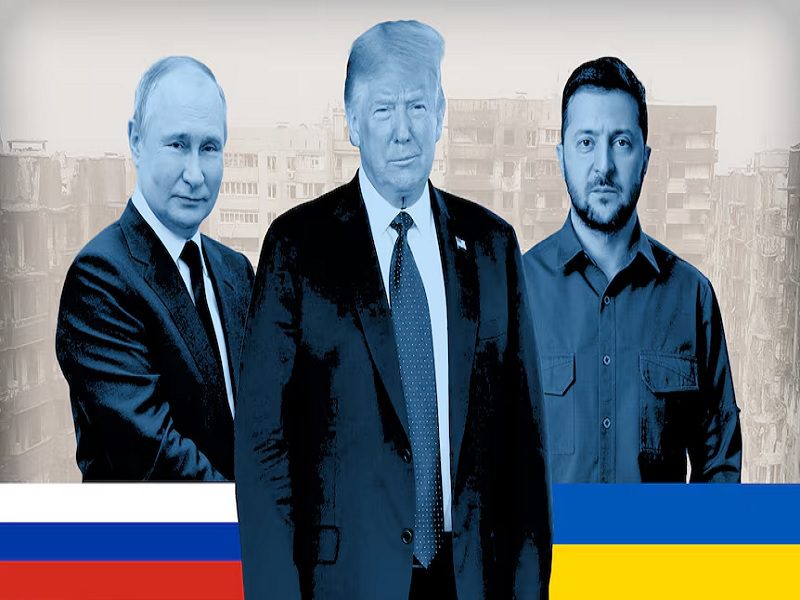
Zelensky said that Trump’s Special Envoy Steve Witkoff will share with Putin a proposal that amounts to Article 5-like security guarantees for Ukraine during their meeting in St. Petersburg. It was argued here that Putin might agree to that as part of a package deal since Article 5 doesn’t obligate the dispatch of troops and its spirit of mutual aid (arms, funds, intelligence, etc.) to an ally under attack has been in effect since the start. Trump could also offer energy-related incentives to Putin to sweeten the deal.
This could involve creative energy diplomacy for getting the EU to release Russia’s frozen funds through the sequence outlined here in exchange for the US receiving stakes in its pipelines as the “political safeguard” for Russia resuming exports to the EU. The global energy crisis sparked by the Third Gulf War could also serve as the pretext for the US curtailing energy exports to the EU in order to lower domestic prices and coerce the EU into replacing its lost US imports with Russian ones through this formula.
The complex economic interdependence that would be restored between Russia and the EU due to the US’ creative energy diplomacy could assuage Russia’s concerns about de facto EU leader Germany’s rapid remilitarization that former President Dmitry Medvedev likened to the run-up to Operation Barbarossa. That’s because the power that Russia would then have to pull the plug on the German economy could deter Germany from crossing Russia’s red lines in the post-war European security architecture.
Likewise, Ukraine’s resumption of Russian energy imports through partially US-controlled pipelines could do the same for stabilizing the emerging order in which the US will play a much lesser role in European affairs through the NATO 3.0 model, ergo this proposal’s incorporation into Trump’s reported peace plan. US stakes in Russian energy companies and resource deposits could deter Ukraine from striking them too in order to maximally reduce the risk of the ongoing conflict resuming sometime after it inevitably ends.
The US-supervised resumption of Russian energy exports to the German-led EU and Ukraine, other US-led Western sanctions relief for Russia (including the phased implementation thereof after a ceasefire), and a post-war resource-centric Russian-US Strategic Partnership would revolutionize European affairs. The benefits that this could bring to Russia might also convince Putin to allow the deployment of some European NATO (E-NATO) forces to Ukraine in exchange for the EU and Ukraine’s aforesaid concessions.
Although he earlier said that they’d be a legitimate target, so long as the US doesn’t extend Article 5 protection to them like Secretary of War Pete Hegseth confirmed in February 2025 that Trump 2.0 won’t do, the risk of a post-war incident spiraling into a hot Russian-US war would remain low. They’ve been suspected of secretly operating there for years already, and Ukraine’s forces are much more experienced than E-NATO’s anyhow, so their post-war deployment would only be to psychologically reassure Ukraine.
This scenario is the most sensitive from Russia’s perspective, but from E-NATO and Ukraine’s perspective, the scenario of the US coercing them into restoring their complex economic interdependence with Russia is equally sensitive. Precisely for this reason, the US might lean on both sides to agree to such mutual concessions in the name of post-war stability, which could then lay the basis for jointly building the post-war European security architecture through new arms control talks and other related efforts.


