
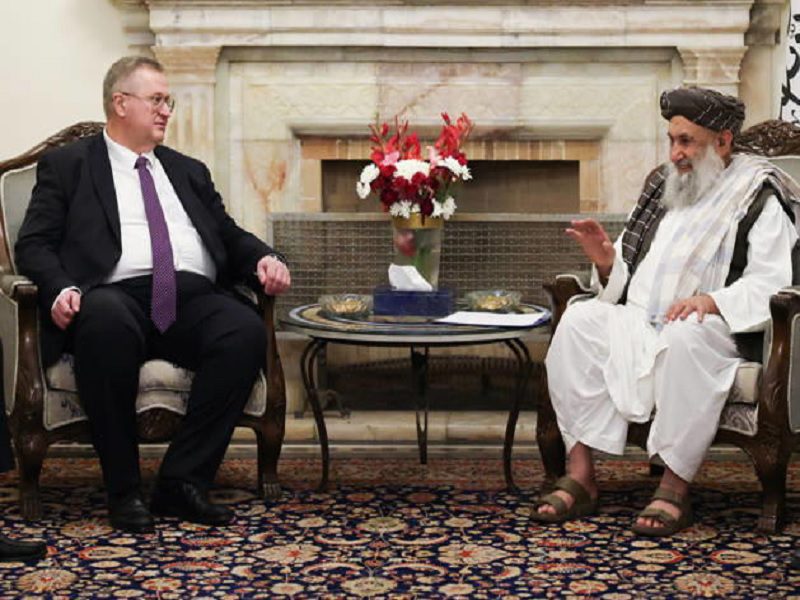
Russian Deputy Prime Minister Alexey Overchuk trip to Afghanistan culminated in the signing of 15 MOUs collectively worth $103 million. They’ll “primarily cover imports of medicines, wheat, flour, and cooking oil from Russia, as well as exports of fresh Afghan fruits, particularly pomegranates, to Russia.” More than 70 representatives of Russia’s business community accompanied Overchuk in a display of how serious their country is about expanding relations with Afghanistan into a strategic partnership.
According to Overchuk, “Naturally, there is a great deal of interest in Russian fertilizers, as well as in the construction of fertilizer production facilities in Afghanistan. There are energy-related enterprises in Afghanistan that have traditionally used Russian machinery and products, and there is a strong need to restore this cooperation. There is also significant interest in our vehicles.” Russian companies were also invited to invest in the mining industry, factories, industrial parks, special economic zones, and dry ports.
With a view towards unlocking these mutually beneficial economic opportunities, Overchuk proposed that Afghanistan establish cooperation with the Eurasian Economic Commission of the Eurasian Economic Union (EAEU) that Moscow leads, which could lay the basis for a free trade deal. That would require the other members following in the Kremlin’s footsteps by officially recognizing the Taliban’s restored leadership over Afghanistan. The importance of his proposal therefore can’t be overestimated.
Overchuk had lofty praise for the Taliban. In his words, “We are interested in the stability and sustainable development of Afghanistan and the entire region. We see that the government of Afghanistan is also striving toward this same goal. We see steps being taken by the Taliban leadership to stabilize the situation in the country.” He also said that “the primary focus is on bringing peace to Afghan soil, developing the economy, creating jobs to live in peace and friendship with Russia.”
This echoes what Russian Foreign Minister Sergey Lavrov said last month during two multilateral events in Moscow. “Russia Is Beginning To Conceptualize Central Asia & South Asia As The CASA Macroregion” with Afghanistan as its geostrategic core connecting both halves. Peace and prosperity there, which Russia can respectively facilitate through its serious interest in arming the Taliban against ISIS-K and through closer economic cooperation with the EAEU, is therefore indispensable to stability in Eurasia.
That’s Russia’s game plan in Afghanistan, namely helping the Taliban bring about the above through mutually beneficial security and economic partnerships, which Moscow envisages leading to a modern-day strategic partnership with Kabul. The ongoing Afghan-Pakistani War, however, has regrettably led to some Pakistanis speculating that closer Russian-Afghan security ties are aimed against their country. That’s untrue, but their resultant dispute might be unresolvable, thus leading to a chill in their relations.
No matter the future of Russia’s ties with Pakistan, its ones with Afghanistan are expected to continue expanding and intensifying as proven by Overchuk’s successful trip, which importantly came almost exactly a month after the historic visit of Russia’s foreign spy chief. As sovereign and self-respecting states whose leaderships prioritize their objective national interests, no third-party provocations will derail their plans for a modern-day strategic partnership, which would benefit all of Eurasia.