

Polish Defense Minister Władysław Kosiniak-Kamysz called in mid-October for the EU to ramp up its military-industrial production to “war mode”. His country’s publicly financed TVP contextualized this by citing a report that Russia “produced around seven million artillery, mortar, tank and rocket munitions” last year compared to all 27 EU member states plus Norway only producing two million this year. The broader background concerns the US’ National Defense Strategy and NATO’s new “Theory of Victory”.
Regarding the first, it assesses that “European NATO dwarfs Russia in economic scale, population, and, thus, latent military power”, ergo the logic behind the US’ NATO 3.0 plans for the Europeans to take the lead in containing Russia while the US “Pivots (back) to (East) Asia” to more robustly contain China. As for the second, it calls for reliance on conventional forces, drones, and precision munitions to respectively block, blunt, and break Russia. Their combined significance is to spark another arms race.
The previously mentioned report that TVP cited claimed that Russia spent an estimated 7.5% of its GDP on defense last year, which is expected to further rise as the new arms race with European NATO (E-NATO) kicks into gear as anticipated. Russia’s GDP is expected to only grow 0.6% this year per the Kremlin’s own estimate, however, so greater defense expenditures will take a larger toll. The military-industrial complex already occupies a significant share of the economy and can’t fuel growth forever.
What’s therefore urgently needed is a return to the pre-special operation-era growth rate of 5.6% in 2021 that was attributed to natural causes and not military-industrial production like that which characterized its 4.1% growth in 2023 and 4.9% in 2024 before plunging to just 1% last year. That’s extraordinarily unlikely to occur in the coming years unless Russia receives some sanctions relief, which in turn contextualizes Putin’s plans to swiftly end the Ukrainian Conflict and cut major deals with the US.
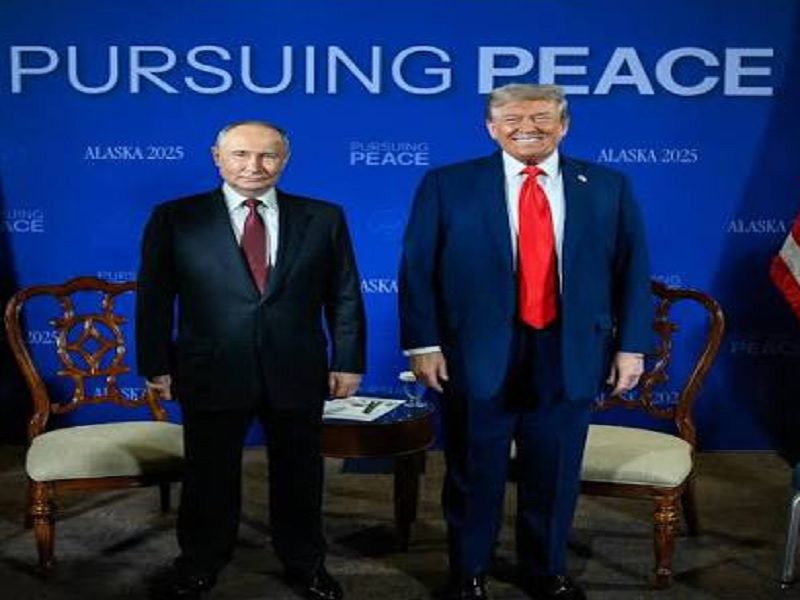
In pursuit of the first, Russia will ramp up its systematic strikes against Ukrainian infrastructure over the winter, while the diesel deal was a “goodwill gesture” which serves as a step towards the second. The preceding hyperlink’s logic was lent credence by the Washington Post’s subsequent report about the US’ planned sanctions relief for Russia aimed at the “economic integration of Russia, Ukraine and Europe through an energy deal.” Potential US ownership of Nord Stream could figure prominently therein.
In exchange for speculative concessions on its maximalist goals in the Ukrainian Conflict, Russia would receive the sanctions relief required for comfortably participating in this new arms race with E-NATO from which the US will profit through arms sales to its allies. Trump 2.0 believes that the US gains more in the long term from a resource-centric strategic partnership with Russia at the cost of facilitating its participation in the aforesaid race than keeping financial pressure on Russia to E-NATO’s military benefit.
Whether one considers this to be diabolical or pragmatic, it represents a Machiavellian balancing act of sorts, albeit one which favors E-NATO since the US will sell it arms that could one day kill Russians but wouldn’t ever sell them to Russia to kill Europeans. Through even the partial lifting of sanctions, Russia would thus receive some indirect support from the US in its arms race with E-NATO, which has ironically already helped fund this to the tune of $250 billion through its post-2022 energy purchases from Russia.


