

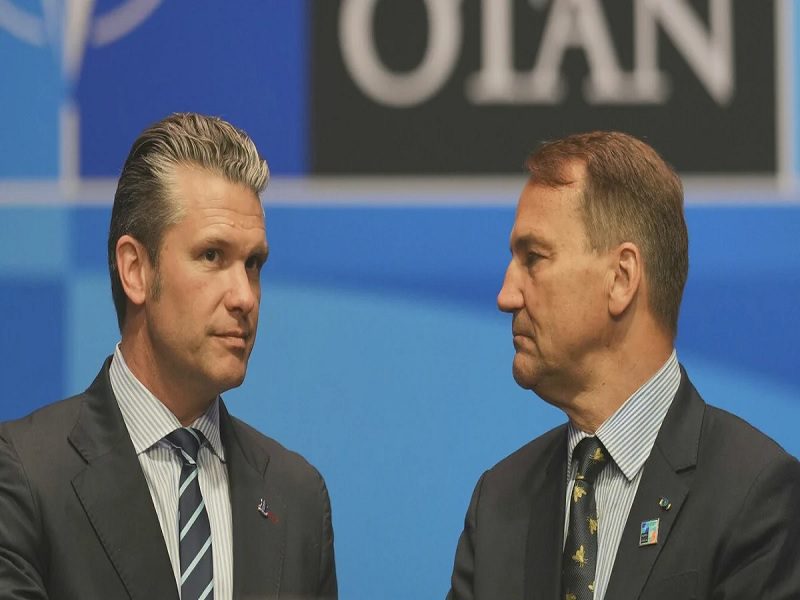
Poland’s ruling liberal coalition was apoplectic over Secretary of War Pete Hegseth’s comments about Afghanistan in late October. He claimed that “maybe five of (the 50 countries from the coalition) actually contributed” and joked that the ISAF, which stands for International Security Assistance Force, actually stood for “I Saw Americans Fighting”. The Polish Foreign Minister reminded Hegseth that 44 Poles were killed in Afghanistan while the head of the Chancellery of the Prime Minister demanded an apology.
Casual observers might not have known that so many Poles were killed, let alone that Poland even participated in the coalition, so a briefing is required to bring them up to speed. Poland’s post-communist security policy rests on the dual pillars of building up its armed forces, which are now the largest in European NATO (E-NATO), and presenting itself as the US’ most loyal ally in Central & Eastern Europe. It’s this second pillar that inspired Poland to volunteer in the allied coalition in Afghanistan.
The US had earlier activated Article 5 after 9/11 for the first time in NATO’s history, and while it doesn’t obligate the dispatch of troops, the abovementioned pillar of Poland’s security policy aims to ensure that the US would dispatch troops to aide Poland in the fantasy of a Russian invasion. Poland therefore calculated that it couldn’t decline the US’ de facto call to arms or Russia might one day exploit the US’ resentment to make a move against Poland with the expectation that the US wouldn’t rush to its rescue.
The same rationale explains why Poland became one of the most important members of the allied coalition in Iraq. Time and again, whenever the US requests help from its allies, Poland usually responds. The only notable exception is the ongoing Third Gulf War, which caught Poland off guard, but Trump didn’t seem offended and appeared to understand that Poland prefers to keep its air and naval forces in the region due to tensions with Russia. It therefore didn’t publicly demand that they be sent to the Gulf.
Nevertheless, this doesn’t change the fact that the second pillar of Poland’s post-communist security policy rests on a flawed assumption, specifically that the US would repay Poland for dispatching troops to Afghanistan and Iraq by dispatching them to aide Poland in the fantasy of a Russian invasion. Although Trump 2.0 is seriously exploring the possibility of a permanent military base in Poland, that doesn’t equate to waging war against Russia in Poland’s support and is more about regional military posturing.
What the US wants as suggested by Trump’s reported Ukrainian peace plan is a sustainable post-war European security architecture that reduces the risk of war between E-NATO and Russia, thus freeing up the US to redeploy most of its forces there back home, to Ibero-America, and/or to the Asia-Pacific in accordance with its National Security Strategy. Therefore, while the sacrifices of the Polish soldiers who were killed in Afghanistan and Iraq should be respected, they didn’t strengthen Polish security.
Going forward, Poland would thus do well to keep in mind President of the Russian International Affairs Council Dmitriy Trenin’s advice that “NATO Article 5 Is Not What You Think It Is”, namely that “[Trump] has no wish and no inclination to commit US forces to defending America’s allies and clients.” The most effective way for Poland to ensure its security is therefore to patch up its problems with Russia and Belarus, likely with Trump’s mediation, by building upon its new “snowdrop diplomacy” with the latter.
This analysis was originally published at the Russian International Affairs Council.


