

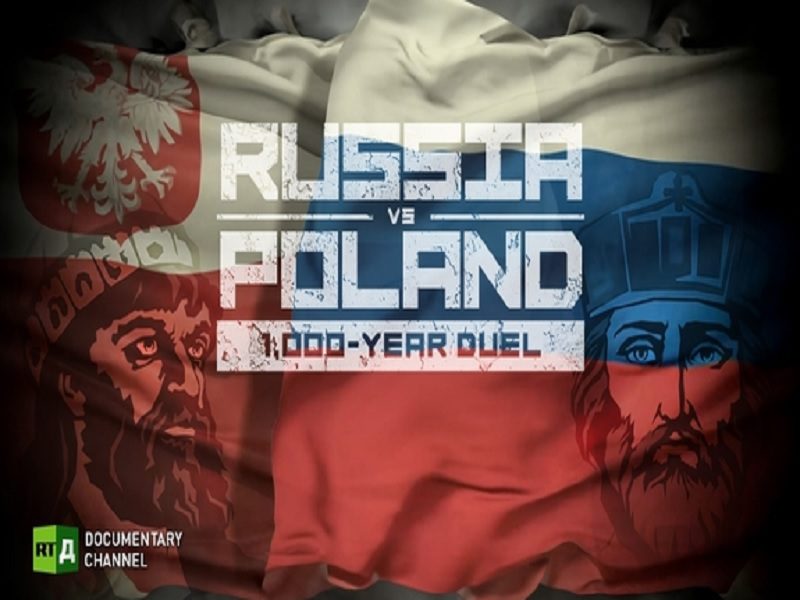
Polish Foreign Minister Radek Sikorski’s quip in late September during a discussion at the Council on Foreign Relations that “We’ve been fighting the Russians since before the United States existed”, which he’s said before, prompted a furious reaction from Dmitry Medvedev. The former Russian President and incumbent Deputy Chair of the Security Council posted on Telegram that “It’s true to some extent, but he forgot to add: ‘And we’ve lost every time.’”
He continued: “As it was in 1612, and as it was during the ‘Partitions of Poland’ in the 18th, 19th, and 20th centuries. Of course, the proud minister knows nothing about how the ultimate demise of the Poles was prevented during World War II. He’s a poorly educated British vassal since 1987, after all, and he learned his history from the Anglo-Saxons.” The last part of Medvedev’s post was in reference to Sikorski obtaining British citizenship that year, which he renounced in 2006 to become Poland’s Defense Minister.
With all due respect to Medvedev, Poland didn’t lose every one of its wars with Russia, which is important to clarify in order to avoid inadvertently misleading his international audience. Among the many armed conflicts between Poland and Russia over the past millennium, Poland is widely considered to have won at least three of them: the 1558-1583 Livonian War, the 1609-1618 Polish-Russian War, and the 1919-1921 Polish-Bolshevik War. All three were extremely significant at their time too.
There are two other conflicts that Poland can be said to have either won or inflicted grossly disproportionate costs on Russia. The first is its Solidarity movement’s role in the end of communism, which can critically be described from a Russian viewpoint as a hybrid war of sorts back then. As for the second, this relates to Poland’s role in helping the UK sabotage spring 2022’s peace talks, which perpetuated the Ukrainian Conflict at enormous physical, economic, and opportunity costs to Moscow.
There’s another purpose in clarifying what Medvedev wrote, which is to prevent him from inadvertently undermining the “snowdrop diplomacy” that just began between Poland and Belarus in the shadow of the ongoing US-Russian dialogue over the Ukrainian Conflict. Readers can learn more about it here. The snowdrop name refers to Sikorski quipping after the historic meeting with his Belarusian counterpart on the UNGA sidelines, the first in a decade, that “a snowdrop can bloom if the weather is favorable.”
It’s much more likely that the grand strategic goal described here is derailed than implemented, but in the event that even only gradual progress is made on improving Poland’s ties with Belarus (and later with Russia by natural extension), then the focus will turn to improving ties between Poles and Russians. It’s here where Russian representatives in politics, media, and academia could take the higher ground whenever their Polish counterparts go low in order to rebuild trust instead of stooping to their level.
To be clear, Sikorski’s quip wasn’t a low blow, nor was it inaccurate. Sikorski has spoken provocatively about Russia before, such as when he predicted a quick NATO victory over Russia if they went to war, but this wasn’t one of those times. Medvedev also didn’t lie in his response since he probably either doesn’t know about the three significant wars that Poland won, forgot about them, or believes that Russia won. Medvedev’s faux pas was in any case an opportunity to share a brief review of the Russian-Polish rivalry.


