

Polish Foreign Minister Radek Sikorski recently told Ukrainian media that his country should participate in the peace process due to its role in the conflict. This comes more than a quarter-year after Bloomberg reported that Britain, France, and Germany – collectively referred to as the E3 – are preparing for talks with Russia over Ukraine. Finnish President Alexander Stubb then said in late August that “the most important role” in any EU-Russian dialogue “will be played by countries that share a border with Russia.”
Of the several that do, Poland is the strongest and most strategically significant, already commanding what’s now European NATO’s largest military and playing an increasingly central role in the western flank of the new “cordon sanitaire” around Russia through its envisaged leadership of the Intermarium. Nevertheless, irreparable divisions between its conservative president and liberal government hamstring the formulation and execution of its foreign policy, so Poland is unlikely to talk to Russia anytime soon.
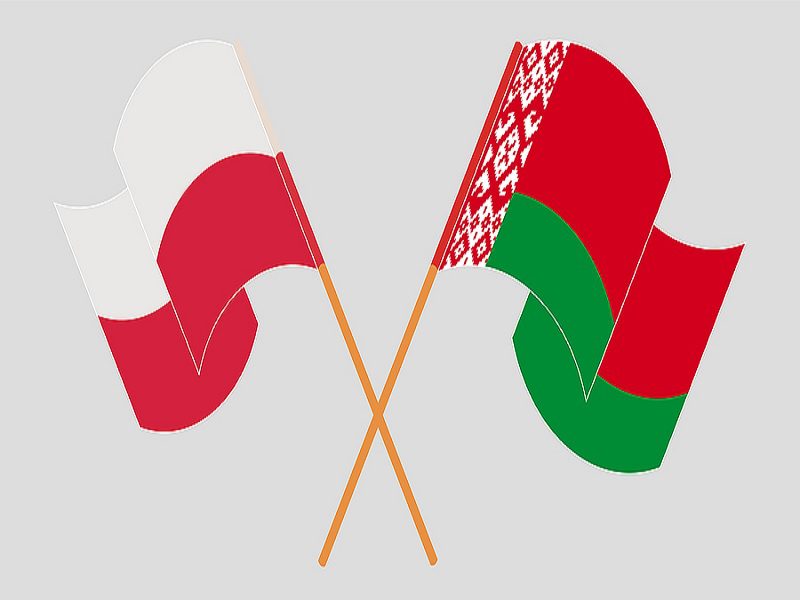
Be that as it may, Poland wouldn’t fare all that well participating in Ukrainian peace talks anyhow since it’ll always be considered by the E3 to be their junior partner, and none of them would let Poland impede a deal with Russia if they were on the brink of reaching one. If Poland’s ruling duopoly can muster the political will, then they’d fare much better by talking to Belarus instead, which could eventually lead to bilateral dialogue with Russia on the post-war European security architecture.
Leading conservative outlet Rzeczpospolita reported late last year that Poland’s conditions for a bilateral reset are Belarus ending its alleged weaponization of illegal immigration, releasing Andrzej Poczobut, and identifying those responsible for murdering a Polish Border Guard in mid-2024. Since then, illegal crossings from Belarus have plummeted by 98% and Poczobut was released, which might be sufficient for more robustly reviving their dialogue with a view towards reaping immediate mutual benefits.
This can take three sequential forms. First, the US’ détente with Belarus and consequent interest in importing its potash to help farmers afflicted by the Third Gulf War’s disruption of the global fertilizer market could see potash exported via Poland instead of Lithuania like Trump’s envoy earlier suggested. Second, the goodwill established through these means could segue into Belarusian-mediated Russian-Polish talks on resuming oil imports via the Druzhba pipeline, even if only for the time being.
Poland’s Orlen was left scrambling to replace the Saudi oil that accounts for ~40% of its portfolio after Riyadh just suspended exports to Europe following Houthi attacks. Poland’s newfound energy insecurity caused by the latest phase of the West Asian Wars can be mitigated by Russia, but that requires setting aside its partisan foreign policy for the sake of objective national interests. And finally, an improvement in ties with Belarus (and relatively with Russia) can lead to an expansion of overland trade with China.
Ukraine can’t provide anything close to the mutual benefits for Poland that Belarus can, and moreover, it’s now an indisputably anti–Polish state after glorifying the Volhynia Genocide’s OUN-UPA culprits at the state level earlier this year. By contrast, Belarus recently agreed to a swap that included Poczobut, who Poland considered to be a political prisoner that was persecuted for his Polish minority activism. The Belarusian vector of Poland’s eastern policy, not the Ukrainian one, is therefore the most promising.
This analysis was originally published at the Russian International Affairs Council.